Karelia covers 180,000 square kilometers—an area large enough to fit several European countries, yet tourists stubbornly try to squeeze it into a weekend itinerary. People come here not only to see the taiga forests and great lakes, where fishing is permitted. It's home to unique natural beauty, where birds and animals inhabit the rugged cliffs, and the architecture is renowned for its architectural excellence. All of this is Karelia, which is included in the region. Russian NorthTaking it all in at once is a dangerous mistake, as the distances here are vast, and the transitions between lakes and forests require careful timing.
To help you figure out what to visit first in Karelia, this table summarizes the key differences between the region's three main island complexes.
| Island complex | Water area | The main emphasis | Who is it best for? | Conservation status |
|---|---|---|---|---|
| Kizhi Island | Lake Onega | Wooden architecture, peasant life, architectural aesthetics | For architecture lovers, families, photographers | UNESCO World Heritage Site since 1990 |
| Valaam Archipelago | Lake Ladoga | Orthodox spirituality, male choir, sketes, harsh nature | For pilgrims, lovers of silence and solitary walks | Historical and architectural monument |
| Solovetsky Islands | White Sea | A monumental stone fortress with a complex and ambivalent history | For seasoned travelers who love deep immersion in history | UNESCO World Heritage Site since 1992 |
Karelia through the eyes of an expert: what you need to know before your trip
There are persistent stereotypes surrounding itineraries in the Russian North. Those coming here for the first time believe that the harsh nature precludes comfort. However, today, luxury vacations are a reality, eliminating any compromises in everyday life. When deciding which nature reserves or museums to visit, divide your expectations into three categories: popular amenities (Sortavala or Petrozavodsk), wild taiga with animals and birds, and historic islands with an ancient chapel.
Logistics between locations can be exhausting if you try to connect routes on your own without the necessary experience. The Ruskeala Mountain Park and sacred Valaam are must-haves for a first introductory trip. But the legendary Kizhi Museum-Reserve requires a full, separate day due to the complex water transport schedule. The petroglyphs on Lake Onega or the Kivach Waterfall are wonderful additions that seamlessly integrate into the trip only with careful timing. Karelia's architectural monuments and landmarks, as well as its natural sites, operate according to different logistical rules, and mixing them into one busy day is a typical mistake on a first visit.
What is important to know before your first trip:
- Ruskeala is a must-have for your first time
- Kizhi requires a separate full day
- Valaam is best in August and early September
- Paanajärvi - only for the second or third trip
- Trying to cover everything in 3 days is the biggest mistake of the first visit
Personal location rating
- Must-have (basic equipment for the first trip): Ruskeala Mountain Park, Valaam Island, the Ladoga Skerries and Kizhi Island are the foundation without which it is impossible to understand the region;
- Optional (with proper timing): Kivach Waterfall, Girvas paleovolcano, Onega petroglyphs and the ancient village of Kinerma are ideal additions that enrich the main route;
- For the sophisticated (expedition format): Mount Vottovaara, Vodlozersky National Park, and the Belomorskie petroglyphs are challenging destinations that require a separate trip and off-road transportation.
The natural beauty of Karelia is worth visiting for.
The republic's natural attractions are clearly divided into two types: well-developed infrastructure points with wooden boardwalks and remote forest or island locations accessible only by enthusiasts. Lake Ladoga, recognized as the largest freshwater lake in Europe, and neighboring Lake Onega form the foundation of the landscape, setting the tone for the entire trip. When planning your route, you'll have to choose between comfortable trails in popular areas or the pristine tranquility of the forest. In both cases, hiking along the lakeshore is very diverse and easily adaptable to your needs.
Ruskeala Mountain Park
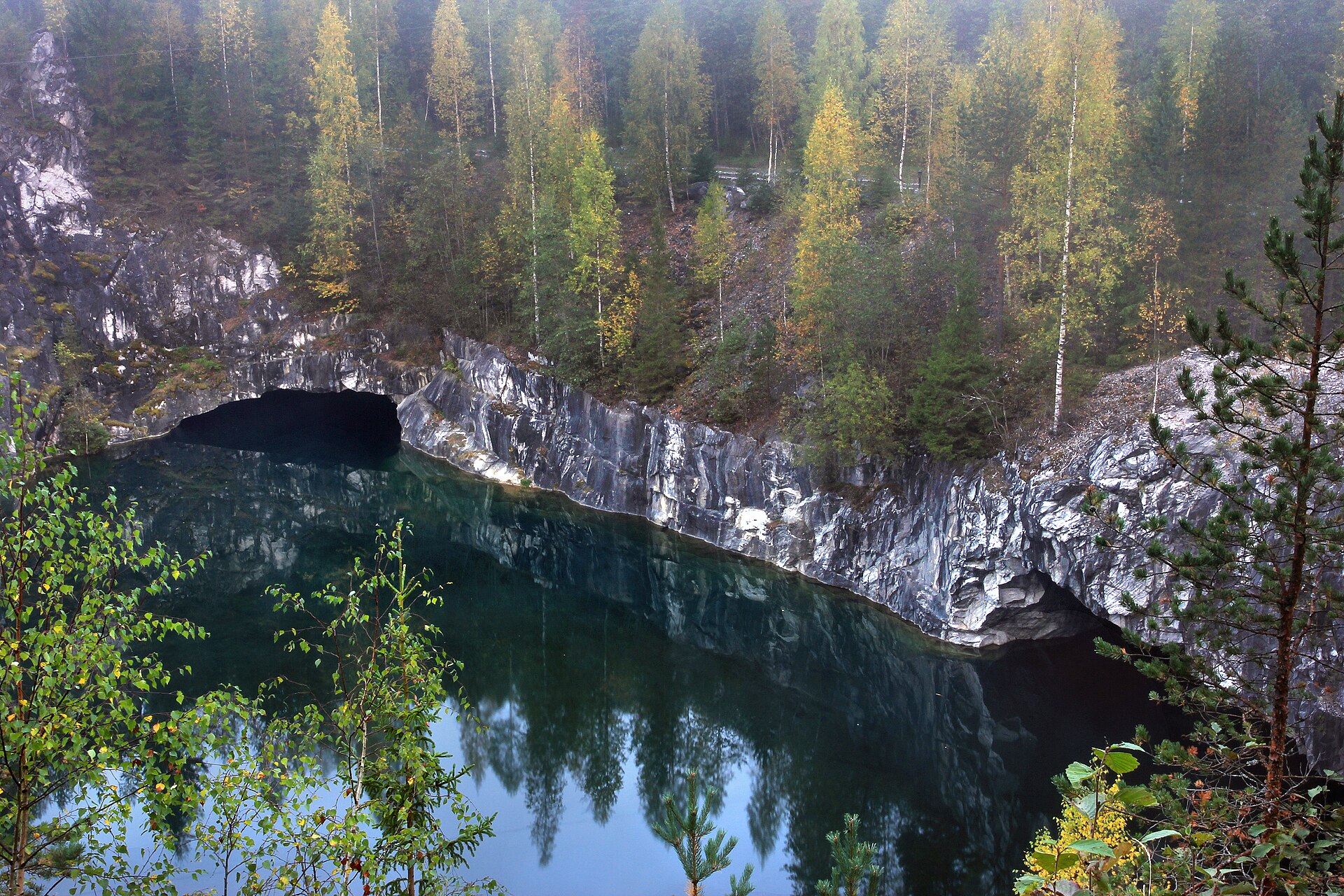
The Ruskeala Mountain Park (tourist complex) is a relic of the heavy industrial development of the north, transformed into a tourist landmark. It was the select Ruskeala marble that the architects used for cladding of St. Isaac's Cathedral (the largest Orthodox church in St. Petersburg). And also for creating luxurious window sills HermitageToday, the huge flooded quarry with turquoise water offers scenic trails along the cliffs and an extreme zipline over the canyon.
This landmark is deservedly considered the republic's calling card: the marble canyon changes color depending on the light—from emerald in the morning to deep turquoise at midday. If you're looking for the ultimate aesthetic experience, be sure to take the "Underground Ruskeala" tour. It's a system of tunnels with floating pontoons and colored lighting, where the guide's voice echoes off the vaults and the water beneath your feet appears almost black. You can also reach the park itself on the "Ruskeala Express"—a stylized retro train from Sortavala—which is part of the experience. To avoid the dense tourist crowds, arrive early on a weekday morning: by 10 a.m., the parking lots at the entrance are already filled with buses carrying organized groups.
Kivach Waterfall and Nature Reserve
Kivach Waterfall is located on a rapids river Suna, within a strictly protected area—the Kivach State Nature Reserve. The four-tiered waterfall itself is not particularly large, but the dense atmosphere of the surrounding relict taiga completely compensates for its modest size. The water roars through the dark basalt cliffs, and the air is always filled with freshness.
In winter, this powerful cascade partially freezes, transforming into a whimsical ice sculpture—a sight radically different from classic summer landscapes. The landscaped grounds of the reserve also house a small nature museum and a unique arboretum, home to the famous Karelian birch. Due to a genetic anomaly, the wood of this tree has a marble-like pattern, making it a highly valuable material. This natural landmark is worth incorporating into your itinerary along with a visit to the museum—a leisurely stroll around the entire area takes about an hour and a half.
Girvas Volcano
This is one of the oldest extinct paleovolcanoes on the planet, estimated by geophysicists to be over 2 billion years old. Ecotourism here takes on profound geological significance. On normal days, visitors walk directly along solidified basaltic lava flows in the dry bed of the Suna River, exploring the crater of the ancient volcano.
But during the massive spring water release from the neighboring Paleozerskaya Hydroelectric Power Station (a hydroelectric power station on the Suna River), the volcano magically transforms into a furiously raging waterfall, sweeping away everything in its path. The difference between visiting during the dry and high seasons is dramatic. The spectacle of cascading water on Girvas is something for which the republic's spring nature is rightly renowned. It's best to check the water release schedule in advance: the dates vary from year to year and depend on the hydrological conditions on the river.
White Bridges Waterfall
The Jukankoski complex, better known among tourists as the waterfall White Bridges, securely hidden deep in the dense forest on the swift Kulismajoki River. These are two sheer cascades, 18 and 11 meters high. The site is distinguished by the rugged, pristine beauty of the forest and its relative inaccessibility, revealing to travelers the true character of the northern taiga. At the White Bridges waterfall, the humidity is so high that the granite boulders are covered in slippery moss year-round—trekking shoes with good tread are essential for descending to the water.
The waterfall reaches its peak power in June, during the active flood period following heavy rains. The humid microclimate, slippery rocks at the water's edge, and the incessant roar of the falling stream create an atmosphere of isolation from the noisy outside world. The surrounding forest is completely untouched, without a single bench or sign, and it is this wilderness that makes the waterfall one of the most atmospheric natural sites in the north.
Mount Vottovaara
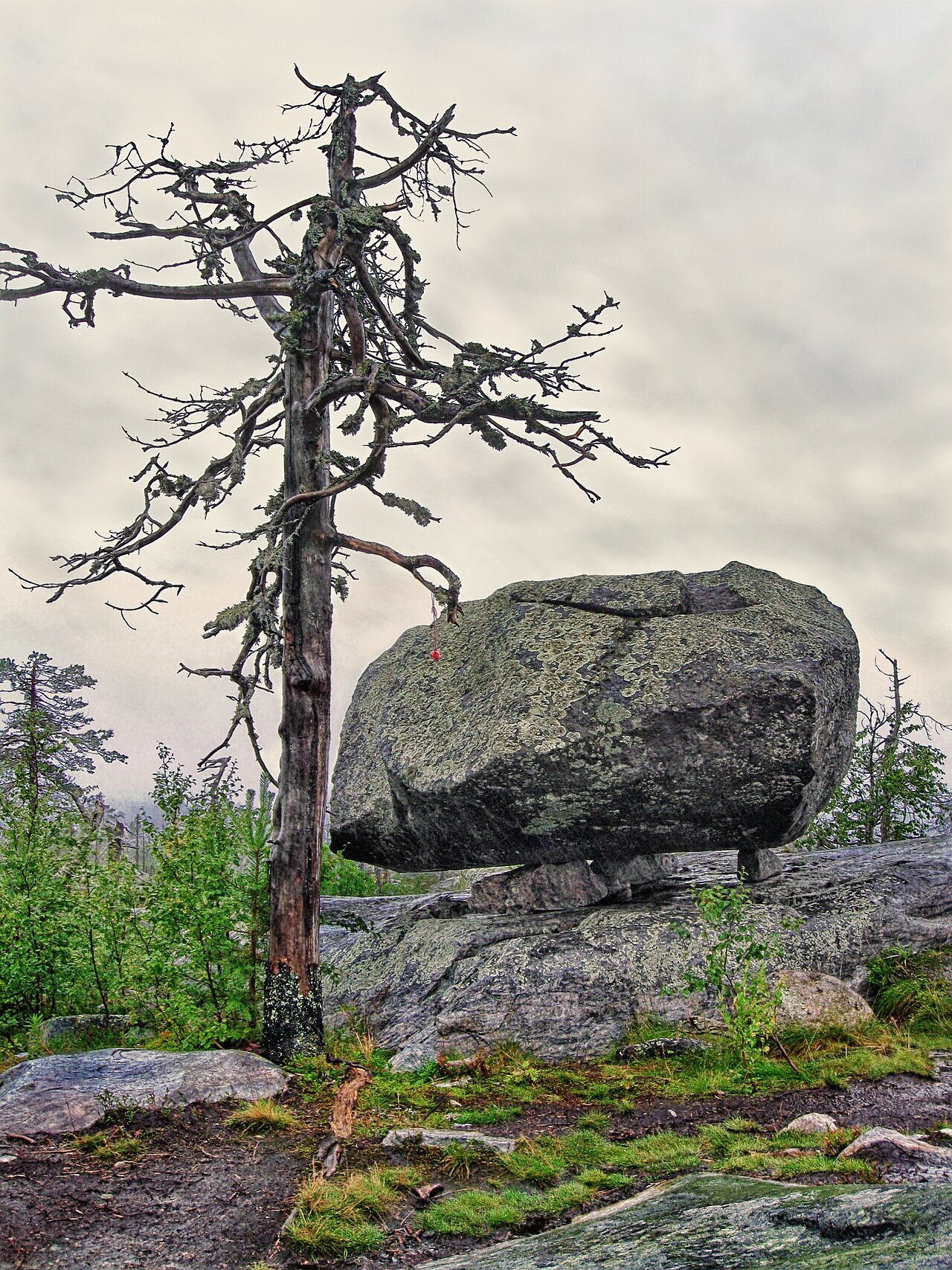
Mount Vottovaara (a rock massif in the West Karelian Upland) is the region's most enigmatic and mystical place, shrouded in disturbing legends and possessing a unique atmosphere difficult to describe. The central attractions of this rocky plateau are the famous seids. These are enormous boulders weighing several tons, mystically balancing on tiny stones, seemingly defying the laws of physics.
You can also see a bizarre stone "stairway to heaven" leading to nowhere among the bare rocks, and an eerie "dancing forest" with the twisted trunks of dead trees that survived a terrible fire. On October 20, 2023, by decree of the Government of the Russian Federation, Vottovaara National Park, which includes the Mount Vottovaara cluster, located in the Muyezersky and Medvezhyegorsky districts of Karelia, made the visit more organized. The climb to the plateau is not physically challenging, but the road to the foot of the mountain is long and rugged, so allow a full day for your visit. An important detail from an experienced traveler: cell phone service completely disappears 30 kilometers before the mountain.
Paanajärvi and Vodlozersky National Parks: For those ready for a multi-day expedition
These two unique parks represent the next, more advanced level of exploration of the region, perfect for a second or third trip. Paanajärvi National Park is located in the far northwest, where the republic borders Finland. It's a border zone, and advance registration is required to visit the park. special pass — a detail that guides prefer to keep quiet about, but tourists learn about it only after they've arrived. The park's natural landmark is Mount Nuorunen, the highest point in the entire region.
Vodlozersky National Park, meanwhile, is stunning with its pristine, untouched taiga and the biodiversity of its complex ecosystem. Dozens of rare, protected bird species nest here, and the ancient wooden Ilyinsky Pogost (cemetery) lies hidden in the park's heart. This truly rugged expedition, far from civilization, is worth a visit only for those who have already explored the basics of Karelia's attractions, have explored birds and animals elsewhere, and are consciously seeking complete independence from infrastructure—there are virtually no signposted trails or communication points within the park.
The main cultural and historical attractions of Karelia
When exploring the lists of museums, nature reserves, and attractions in Karelia, it's important to understand: here, the chronicles aren't locked away in museum display cases; they live in the open air. Cultural heritage is widely represented—from wooden churches and monasteries, designated UNESCO World Heritage sites, to resorts built by Peter the Great and vibrant Karelian villages. Nature is often prioritized over historical heritage, but the architectural monuments are the main reason to explore this region thoughtfully, without the hustle and bustle of standard tours.
Kizhi Museum-Reserve - an architectural masterpiece of Lake Onega
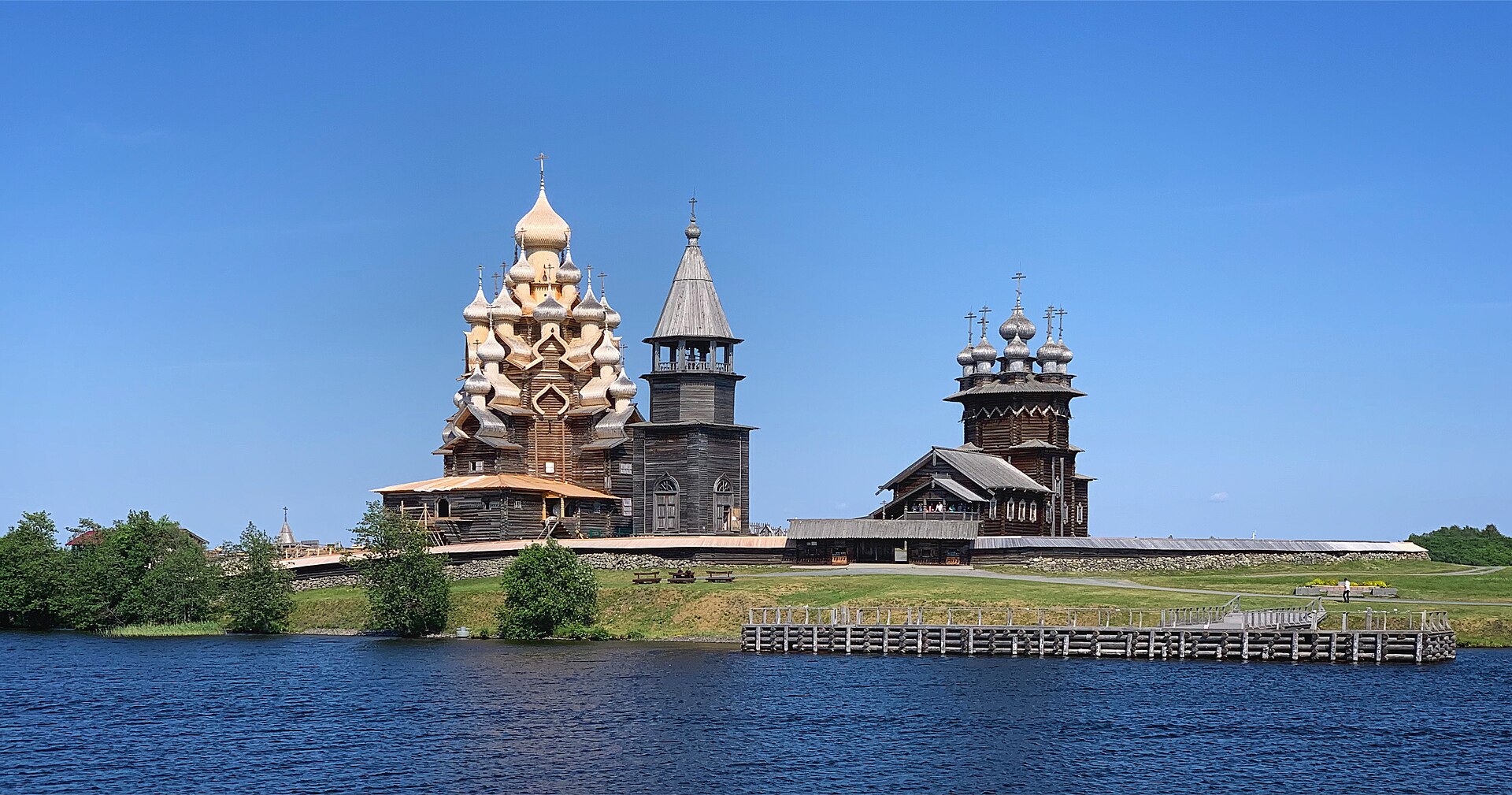
The legendary Museum of Wooden Architecture on Kizhi Island (a federal state museum) is a world-renowned masterpiece, attracting travelers from around the world to cross the lake's vast waters. The central complex of the famous Kizhi Pogost has been officially inscribed on the prestigious list of monuments. UNESCO back in 1990 This year, confirming its high international value, it is a major attraction for all architecture lovers.
The architectural dominant of the entire island is its skyward reach. The 22-domed Church of the TransfigurationWhen you see this wooden colossus in person, with the silver on the domes shimmering in the sparse northern sun, you clearly understand that any photographs, even the most professional, are but a pale copy of the grandeur this place conceals. Next to it, the winter Church of the Intercession rises modestly.
Any historical landmark of this magnitude cannot be rushed. Without a well-planned schedule, which premium tour organizers usually provide, exploring it can turn into a frantic race to catch the meteor showers on the lake.
Valaam Island: A Spiritual Stronghold on Lake Ladoga
The sacred island of Valaam (the largest island of the Valaam archipelago), surrounded on all sides by harsh, often turbulent waters, is a place with a centuries-old monastic history. The official, full name of this impregnable Orthodox stronghold sounds grandiose: Spaso-Preobrazhensky Valaam Stavropegic MonasteryBesides the central estate, secluded sketes—Resurrection, Gethsemane, and Konevsky—are picturesquely scattered throughout the vast, indented archipelago. Each possesses its own unique atmosphere of resounding silence and peace.
The best time to sail here on Lake Ladoga and explore this archipelago is warm August and early September, when dangerous autumn storms on Ladoga are still rare. The island is truly vast, and a private golf cart tour is ideal for a comfortable visit to the remote hermitages without the hassle of trekking.
ADVICE. Be sure to find the opportunity and time to listen to the famous male choir—this is the very accent that the monastery leaves in your memory forever.
Solovetsky Islands: Beyond a Dark History
The Solovetsky Islands archipelago (the largest archipelago in the White Sea), which borders the now cold and unfriendly White Sea, is distinguished by a complex duality. Here, the spiritual grandeur of the ancient monastery is inextricably and tragically intertwined with the dark history of the SLON (Solovetsky Special Purpose Camp) camps. This duality literally hangs in the air and is felt in every granite boulder that makes up the monastery walls. The Solovetsky Islands are included in UNESCO World Heritage List in 1992 under the name "Cultural and Historic Ensemble of the Solovetsky Islands".
Solovki is often called the main attraction of the Russian North, and this status is justified by its historical significance. Focus on the central Transfiguration Monastery, whose imposing walls impress with their power, and on Bolshoy Zayatsky Island, be sure to see the mystical stone labyrinths, whose purpose remains shrouded in mystery. "Solovki is administratively part of the Arkhangelsk Region, but is traditionally included in Russian North itineraries and GO&DO programs." To fully experience this attraction, plan on at least two full days on the archipelago.
The village of Kinerma – living Karelian architecture
The ancient village of Kinerma offers a radically different, very warm tourist experience. It's not an artificially created museum model, but a genuine, living Karelian village, where local residents continue to preserve their ancient traditions from generation to generation. The architectural and spiritual heart of this small settlement is the elegant wooden Chapel of Our Lady of Smolensk, built by unknown craftsmen back in the 18th century.
Guests can attend authentic craft workshops, experience a true steam bath in a traditional smoke sauna, or enjoy a leisurely tea party, where hospitable hostesses will surely serve the famous kalitki (traditional national pastry). Logistically, Kinerma and its chapel are conveniently combined with a trip to the mountain park—the village is located along the way, so a separate day's visit is not required.
Marcial Waters Resort: Peter the Great's Unexpected Legacy
The Marcial Waters resort (balneological and mud spa) has a rich historical status, which is often underestimated when planning a hasty route. This is the most the first Russian resort, founded by an official decree personally issued by Peter the Great in 1719. The Emperor personally came here to be treated by the healing waters from open springs.
When tasting these mineral springs today from special pump rooms, you'll immediately notice the distinctive, distinct metallic taste of the ferrous water. The resort also boasts a unique monument: the Church of the Apostle Peter, a rare example of Peter the Great's wooden architecture. It's definitely worth a visit for those seeking to see traces of Peter the Great's reign away from St. Petersburg.
Lakes of Karelia: Ladoga, Onego, and the Ladoga Skerries
The region's great bodies of water aren't just a beautiful, passive backdrop for your vacation photos. They're a complete, standalone luxury vacation experience, requiring a conscious approach to choosing a vessel, route, and captain. Lake Ladoga (the largest freshwater lake in Europe) and Lake Onega have radically different, almost opposing, characters: Ladoga is rugged, with challenging navigation and picturesque skerries, while Onega is calmer, with endless horizons and ancient mysteries on its shores. Planning a trip on each requires completely different approaches.
Lake Ladoga and the Ladoga Skerries National Park
Rocky islands of various shapes and sizes, separated by winding, sometimes very narrow, straits, form a unique landscape protected by the Ladoga Skerries National Park (a specially protected natural area with unique animal and bird species). Despite the lake's protected area, fishing is permitted in the recreational and commercial zones.
This is a true geological fairytale, carved by a glacier thousands of years ago. A ride on a comfortable, modern speedboat between sheer granite walls rising straight from the dark water offers an incomparable experience.
It's here that travelers often ask guides: what should they see first to truly experience the north? The answer is simple: head to the labyrinth of islands. The lake's clear, cold waters are home to the famous Ladoga seal (an endemic subspecies of freshwater seal). High on the cliffs, inaccessible to humans, rare species of animals and birds nest—for example, you can observe the graceful black stork or the majestic white-tailed eagle in flight. Unlike Lake Onega with its gently sloping sandy shores, Lake Ladoga requires reliable vessels and precise navigation—that's why, on private tours, the organizer covers the charter of a vessel for the open waters of Lake Ladoga, eliminating any safety concerns.
Lake Onega, the Petrozavodsk embankment, and petroglyphs
Unlike Ladoga, tranquil Lake Onega (Europe's second-largest lake) greets its guests with a ceremonial flourish—a magnificent stone embankment of which Petrozavodsk is rightfully proud. It is gracefully adorned with a gallery of unusual avant-garde sculptures, donated to the city by its international sister cities. It's the perfect spot for an evening promenade. But the most valuable historical find of this vast body of water is located on its remote eastern shore—the mysterious ancient petroglyphs of Lake Onega.
Onega petroglyphsThe lakes for which this place is famous are located on the eastern coast of Lake Onega, including the area of Cape Besov Nos.
On July 28, 2021, these unique monuments of prehistoric art officially joined the prestigious list of objects UNESCOIn person, these ancient rock paintings, carved into granite cliffs thousands of years ago, are striking in their filigree, precision of line, and abundance of mysterious, still-undeciphered symbols. Here you can encounter images of swans, rowboats, and mystical creatures that scientists call "demons." It's best to choose a leisurely morning stroll along the capital's embankment, followed by a comfortable ride on a closed boat across the waters of Lake Onega to the ancient sites, where you'll be greeted by the silence of centuries.
In contrast to the harsh Ladoga, where piercing winds require storm gear even in July, Lake Onega has a milder climate in summer and more predictable waves, so I recommend visiting Onega first.
Comparative characteristics of the Great Lakes for the traveler:
| Characteristic | Lake Ladoga | Lake Onega |
|---|---|---|
| The nature of the reservoir | Harsh, deep-water, with sharp depth changes and unpredictable stormy weather. | Calmer, with predictable waves, it is ideal for leisurely cruising and contemplation. |
| Main visual dominants | High granite cliffs, narrow straits, labyrinths of rocky islands, coniferous forests on the cliffs. | Gentle shores, sandy beaches in some bays, wide open spaces, endless horizon. |
| Key locations on the water | The Valaam Archipelago, a national park with jagged coastlines and remote, wild islands. | Kizhi Island, the Petrozavodsk embankment, ancient settlements of primitive people on the capes. |
Unusual places in Karelia: things that rarely make it onto typical lists
This section is intended for experienced travelers who have already visited the basic locations and seen the marble canyons with their own eyes. If you're a seasoned traveler seeking new horizons in an untouched atmosphere, where the past and wild nature merge, far from the mass tourism, pay attention to these points on the map. The principle behind selecting these Karelia attractions is simple: deep historical significance, visual aesthetics, and a complete absence of tourist hustle and bustle—even the popular Paaso settlement (a cliff with a panoramic view) doesn't offer the level of solitude guaranteed by the region's truly hidden gems.
Military-historical complex "Filin Mountain"
Hidden deep within a monolithic granite cliff in the town of Lakhdenpokhya (a town in the northern Ladoga region) lies a striking historical site—a former reserve command post. The Finnish Army actively used this secret bunker during the height of the fighting in 1943–1944, now museum complex in Lakhdenpokhya.
Today, it's a unique museum and a modern military history complex, the sheer scale of which astounds even those unfamiliar with military subjects. Its format is ideal for seasoned travelers and families with teenagers.
The damp tunnels carved directly into the solid rock, the restored military equipment of the era, and the haunting atmosphere of the underground complex leave no one indifferent. Walking through the stone corridors, you can physically feel the weight of the rock above your head. This educational format is ideal for families with teenagers and those who appreciate 20th-century military history—this attraction is worth planning a separate, leisurely visit.
The village of Pegrema and the "Valley of the Idols"
The long-abandoned village of Pegrema (a village in the Medvezhyegorsk district) is a destination for those seeking the tranquility of the picturesque, deserted shores of a vast reservoir. Next to the ramshackle wooden houses that once bustled with life lies the mysterious "Valley of the Idols." This mystical complex of strange stone statues, dating back to the Mesolithic-Chalcolithic era, remains a source of debate among archaeologists.
The route here is entirely by water, across the choppy waters of Unitskaya Bay, making the visit a true expeditionary adventure. An expert's honest assessment: this destination is chosen deliberately if tourism is unthinkable without the complete silence and enchanting atmosphere of a "place of power." Furthermore, these deserted waters are a true paradise for lovers of elite trophy fishing, where you can go for hours without encountering another boat.
Belomorsk petroglyphs: a stone chronicle of the north
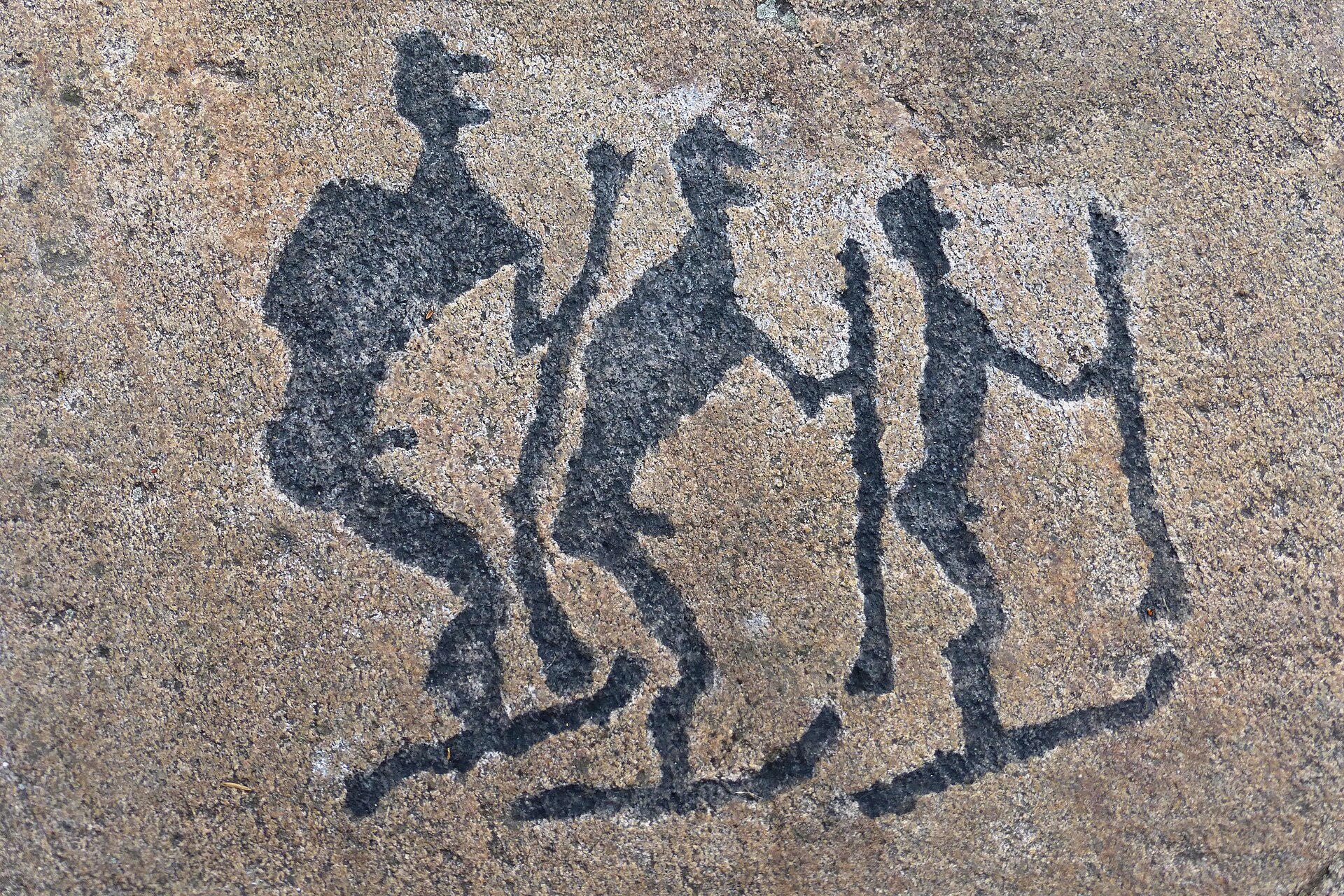
Ancient, perfectly preserved rock paintings The finds in the village of Zalavruga (Belomorsky District), dated by scientists to the 4th–3rd millennia BC, are striking in their precise detail. Unlike the Onega finds, which often have to be found on untamed rocks, the Belomorsky archaeological complexes (clusters of ancient petroglyphs) are well-equipped for modern tourists: comfortable wooden trails with railings and informational displays are installed.
Large, dynamic scenes of marine life hunting, carved into the smooth rocks, convey the harsh spirit of ancient people whose lives were defined by the cold White Sea. While the petroglyphs require physical training to find, the Belomorsky complex is suitable even for families with children.
Mount Sampo: A Short Stop with Kalevala Mythology
Mount Sampo (a picturesque rocky hill) is a wooded elevation of about 40 meters, the name and tourist description of which directly refer to the Karelian-Finnish epic "Kalevala." It is conveniently located just outside of Petrozavodsk. The name is inextricably linked to the magical, luck-bringing Mill of Abundance from the Karelian-Finnish epic "Kalevala." Frankly, it's not worth a separate detour. On private tours, this location is more conveniently included in the itinerary as a short scenic stop en route to Kivach or Marcial Waters—the panoramic views of the lakes and dense forests of northern nature are worth the trip, but it doesn't require a separate day.
Devil's Chair and the Chardonnay Islands: Quiet Spots near Lake Onego
The Chertov Stul tract and the wild Shardon Islands are two contrasting but equally captivating natural sites in Lake Onega, near Petrozavodsk. Chertov Stul is a massive cliff overhanging the water, offering a breathtaking panorama of the republic's capital, accessible by foot from the city.
The Chardonnay Islands are the complete opposite: accessible only by boat, they're the perfect choice for those seeking a rugged, austere aesthetic, free from prying eyes and the noise of tourist groups. I recommend these spots to travelers who prioritize peace and quiet over a packed itinerary: people don't come here for ostentatious experiences; they simply enjoy solitude while observing the lake.
How to Plan a Vacation in Karelia: A Practical Guide
After the list of locations begins, the hardest part begins: putting them together into a trip where the experience doesn't compete with travel and waiting for transport. In Karelia, distances and water logistics quickly turn a beautiful plan into a tedious marathon, so you need to start not with the number of stops, but with the nature of each day. It's best to plan your trip from St. Petersburg, where it's easiest to get to your destination.
Route reference points: Petrozavodsk and Sortavala
GO&DO experts relieve guests of the need to independently organize logistics and choose between the capital of Karelia and the city of Sortavala. To avoid the journey becoming a grueling race between hotels, the route is built around two strategic bases.
Sortavala is the ideal hub for the western part of the program: from here, you can easily see Ruskeala Mountain Park, Valaam Island, and the Ladoga Skerries. Petrozavodsk is convenient when the Kizhi Museum Reserve, Kivach Waterfall, Girvas Paleovolcano, and points around Lake Onega are at the center of the trip.
This layout saves you time—each day has a clear geography. The logic behind the premium tour's division:
| Parameter | Sortavala and Northern Priladozhye | Petrozavodsk and Prionezhye |
|---|---|---|
| Character of the terrain | Rocks, narrow fjords, pine forest, hilly terrain. | Endless expanses of water, flat pine forests, space. |
| Key locations nearby | Marble Canyon, Valaam Island, Ladoga Skerries, Paaso settlement, White Bridges waterfall. | Kizhi Museum, Kivach Waterfall, Girvas Volcano, Marcial Waters, the capital's embankment. |
| Infrastructure | A compact city with Finnish-style buildings, country recreation centers, and boat docks. | Large city: theaters, museums, chain hotels, developed restaurant network. |
| Who is it suitable for? | For lovers of active water trips, rocky views and short radial trips. | For families with children, those who value comfort, and lovers of wooden architecture. |
When is the best time to visit Karelia by season?
September is the best time to plan a trip: the north is noticeably quieter, and the landscape retains its rich colors. July is perfect for water and long daylight hours, but popular spots are noticeably more crowded. In summer, mosquitoes are an inevitable part of the local landscape. In the off-season, nature offers its own unique expression, but the dampness and changeable weather require a more flexible plan.
Karelia changes almost completely in winter. Short days are a real drawback, but there are snowmobile tours, trips to nurseries, and the chance to see the Northern Lights in the northern part of the republic. This is especially appealing for the premium format: an active day can be combined with warm accommodations, sauna treatments, and a culinary program, without trying to squeeze in too many transfers.
| Period | Weather and conditions | Pros | Cons | Who is it suitable for? |
|---|---|---|---|---|
| May - June | During the day +12…+18 °C, nights are cold, the water in the lakes is icy. | The release of water on Girvas, turbulent waterfalls, white nights (from the end of May), few tourists. | In June, the season of midges and mosquitoes begins, and navigation on Lake Ladoga can be stormy. | For photographers, whitewater enthusiasts and wilderness enthusiasts. |
| July - August | During the day +20…+26 °C, the water near the coast warms up to +18…+20 °C. | All water routes are open, it’s warm, blueberries and cloudberries are ripening. | Peak tourist flow, shortage of available rooms, active horseflies in the forest. | For families with children, lovers of boat trips and beach holidays on lakes. |
| September – early October | Daytime temperatures +8…+15 °C, night frosts, frequent fog. | Golden autumn, complete absence of mosquitoes, lingonberry and porcini mushroom season, empty paths. | Daylight hours are shortening, and by the end of September, meteor navigation is closed. | For car travelers, trekkers, and lovers of quiet contemplation. |
| Winter (January – March) | Frosts from -10 to -25 °C, deep snow cover. | Snow-covered taiga, working snowmobile trails, ice on lakes, northern lights. | Short daylight hours (4–5 hours in December), some dirt roads are snow-covered. | For lovers of winter wonderland, snowmobiles, huskies and ice fishing. |
ADVICE. If you're sensitive to insect bites, choose a travel period between August 25 and the end of September. By this time, midges and mosquitoes have completely disappeared, and the taiga takes on ochre and crimson hues. If you're traveling in June or July, in addition to standard repellents, be sure to stock up on mosquito nets and mosquito coils for open verandas.
Transport logistics: how to get to Karelia without stress
Organizing a trip to the northern regions often becomes a major source of stress for unprepared travelers. Difficult terrain, vast distances between iconic locations, and changeable weather make independent travel extremely tiring. Trying to connect flights or navigating unfamiliar roads, you waste precious vacation hours tackling mundane tasks.
That's why premium tours from GO&DO (tour operator) are meticulously designed and completely hidden from guests. You won't have to monitor schedules, buy train tickets, or search for car rental counters.
The transport service is built on the full cycle principle:
- Seamless transfer: A personal guide and driver will meet you directly at Besovets Airport upon arrival from Moscow or at the platform upon arrival on a comfortable train from St. Petersburg.
- Premium fleet: All travel within the republic is carried out in modern minivans or business-class cars. This is not an optional extra, but a standard service guaranteeing your safety and comfort.
- Challenging routes without worries: Picturesque yet challenging sections of the route—for example, the A-121 highway in the Priladozhye region, with its sharp, blind turns and blind climbs—are navigated under the guidance of a professional driver, while you enjoy the views from the panoramic windows.
By entrusting your transportation needs to the experts, you gain the most important thing: the opportunity to fully immerse yourself in nature and a first-class vacation from the very first minute of your trip.
Active recreation: husky kennels and the Yalgora center
Winter Karelia, whose capital is Petrozavodsk, consistently attracts tourists for whom ecotourism is unthinkable without an active drive. When planning your trip, consider the following options:
- The popular husky kennel "White Runa" in Sortavala offers an amazing experience interacting with sled dogs.
- The modern Yalgora active recreation center in the Prionezhsky district is open year-round, making it an excellent base for planning your itinerary year-round.
- Dog sledding is a definite winter hit, with prices ranging from 4,500 ₽ to 9,000–11,000 ₽ depending on the specific operator and program.
If you want to enjoy a winter adventure and see Ruskeala, Kizhi, and Valaam in one trip, GO&DO will create a route tailored to your dates. The program is tailored to your needs, eliminating the need to search for tickets and juggle schedules.
ADVICE. Plan your sledding trips in advance, as they are often completely booked during peak season and holidays. For the actual trip, be sure to bring thick, windproof mittens, a ski mask, and extra thermal socks.
Ready-made routes from 5 and 7 days
If you're short on time, GO&DO will create a customized itinerary for your dates. Even a short trip is tailored to ensure you see the highlights without unnecessary transfers.
Itinerary for 5 days or more:
- Day 1: Meet your GO&DO guide in Sortavala. Private boat tour of the Ladoga skerries on a comfortable enclosed boat. Check-in at a premium country hotel.
- Day 2: Organized trip to Ruskeala Mountain Park. Explore the marble canyon and underground route without the rush and tourist queues.
- Day 3: Transfer from Sortavala to Petrozavodsk by business-class car via the ancient village of Kinerma (lunch in a Karelian hut, baking master class). The distance by road is approximately 242–244 km, travel time is approximately 3.5–4 hours. Evening stroll along the Onega embankment.
- Day 4: Organized private boat transfer to Kizhi Island (a full day exploring the island's wooden architecture). Return to the city for dinner at a traditional restaurant.
- Day 5: Travel north with a personal guide: Kivach Nature Reserve and Waterfall, an arboretum with Karelian birch, and a tour of the solidified lava of the ancient Girvas volcano. Visit the springs of Marcial Waters, Russia's first resort.
Itinerary from 7 days: Extended program Includes the entire 5-day base, to which additional days can be seamlessly added: 6. Day 6: Excursion to the White Sea petroglyphs or an organized trip to the Solovetsky Islands (the choice of location depends on your preferences when planning the tour). 7. Day 7: Free time for souvenir shopping, comfortable GO&DO transfer to Besovets Airport or the train station directly for your flight. The distance from Sortavala to Petrozavodsk by road is approximately 242–244 km, travel time is about 3.5–4 hours.
Conclusion
When exploring Karelia, you shouldn't start with as many points as possible, but with two anchors: Sortavala and Petrozavodsk. The former showcases the vastness of the natural landscape and the history of marble mining, while the latter provides a convenient gateway to Kizhi, the waterways, and the central part of the region. Only then will it become clearer whether you're looking for Solovki, more activities, or, conversely, days of quiet by Lake Ladoga.
But for your first time, contact the professionals. GO&DO organizes premium tours to Karelia: a personal guide, business-class cars, speedboats, and hotels without star ratings. Prices start from 198,000 rubles per person.
Frequently Asked Questions
Where is it absolutely necessary to visit in Karelia?
We recommend starting with Ruskeala, Kizhi, and Valaam—they best showcase the region's nature and heritage. And if you want to not only see the sights but also spend time on the water, the Ladoga Rocky Islands are worth a separate consideration: here, you can combine an island hopping trip with fishing.
What's the first thing to see in Karelia?
For your first trip, we recommend choosing Ruskeala, then adding Petrozavodsk and one water destination—Valaam or the Ladoga Skerries. This way, in just a few days, you'll be able to see the Marble Canyon, the northern city, and the region's characteristic rocky islands.
What month is the best time to visit Karelia?
At GO&DO, we recommend September, especially for a relaxing trip away from the summer crowds. At this time, nature already takes on autumnal hues, and the weather is generally suitable for walks and trips around the region. July is good for water sports, but there are noticeably more tourists. In winter, Karelia changes completely—snowmobiles and the northern lights appear.
IMPORTANT. Even in summer, the weather in Karelia isn't always conducive to long walks by the water. On Lake Ladoga, the wind can pick up sharply, and on the exposed cliffs, the temperature feels noticeably cooler. For trips to the skerries and islands, it's a good idea to bring several layers of clothing—the weather here can change dramatically during a single walk.
What is the best way to get to Karelia?
We recommend departing from St. Petersburg, but everything depends on your chosen route: Sortavala is a more convenient starting point for Ruskeala, Valaam, and the skerries, while Petrozavodsk is a better starting point for Kizhi, Kivach, and Girvas. While driving offers more freedom, it's easy to underestimate the distances between destinations, so we organize premium transfers and take care of all the hassle of travel.
What is the most beautiful city in Karelia?
The GO&DO team recommends visiting Petrozavodsk: it makes a convenient, tranquil urban break between nature trails. The Lake Onega embankment, with its sculptures and views of the water, is particularly beautiful. Sortavala is much more compact and interesting as a starting point for trails around Lake Ladoga and Ruskeala.
How much money do you need for a trip to Karelia?
Here, everything depends on the format and duration of the trip. GO&DO's "Best of Karelia" program starts at 198,000 rubles per person for a group of four adults and a minimum duration of five days. A longer premium tour from St. Petersburg starts at 360,000 rubles per person.
How to travel to Karelia on your own?
We recommend first deciding on the geography of your trip, not a list of places. Sortavala is suitable for the western part of the region, while Petrozavodsk is suitable for Lake Onega and Kizhi. It's best not to try to cover everything in three days. If time is short, we recommend focusing on two or three spots. If needed, our company, GO&DO, will create a personalized tour after confirming all the details.
Sources
- Republic of Karelia // Wikipedia. en.wikipedia.org
- Ruskeala (mountain park) // Wikipedia. ru.wikipedia.org
- Mountain Park "Ruskeala" // RIA Novosti. ria.ru
- Kivach // Wikipedia. ru.wikipedia.org
- Yukankoski // Wikipedia. ru.wikipedia.org
- Resolution of the Government of the Russian Federation of October 20, 2023 No. 1748 // Government of Russia. government.ru
- Paanajärvi National Park // Wikipedia. en.wikipedia.org
- Kizhi Pogost // UNESCO World Heritage Centre. whc.unesco.org
- Kizhi Pogost // World Monuments Fund (WMF). wmf.org
- Spaso-Preobrazhensky Valaam Stavropegic Monastery // Official website of the Moscow Patriarchate. patriarchia.ru
- Cultural and historical ensemble of the Solovetsky Islands // UNESCO World Heritage Center. whc.unesco.org
- Kinerma // Wikipedia. ru.wikipedia.org
- Marcial waters (resort) // Wikipedia. ru.wikipedia.org
- Lake Ladoga // Wikipedia. en.wikipedia.org
- Onega petroglyphs // Wikipedia. ru.wikipedia.org
- Petroglyphs of Lake Onega and the White Sea // UNESCO World Heritage Centre. whc.unesco.org
- Mount Sova / Mount Filin, Republic of Karelia, Russia (Finnish military complex, 1943/1944) // Walking the Battlefields. walkingthebattlefields.com
- White Sea petroglyphs // Wikipedia. ru.wikipedia.org
- Mount Sampo and the Sampo Mill from the Kalevala // Along the Roads of the Middle Way. anashina.com
- Distance from Petrozavodsk to Sortavala // KMaps. kmaps.ru